
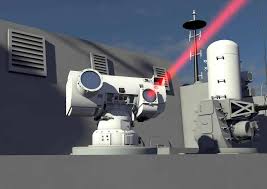
UK orders £316m DragonFire laser
Britain has ordered DragonFire laser weapons for the Royal Navy under a £316m deal with MBDA, following trials that shot down drones flying up to 650 km/h. The first system will be fitted to a Type 45 destroyer in 2027, around five years earlier than first planned.
Costing about £10 per shot, DragonFire promises a low-cost counter to mass drone threats. The programme will support 590 UK jobs and is delivered with QinetiQ and Leonardo, aligning with the Strategic Defence Review’s push to field directed-energy weapons at pace.

Babcock posts strong first-half growth as margins and cash improve
Babcock International delivered a strong first half to FY26, reporting higher revenue, profit and cash flow, with full-year expectations unchanged. Revenue rose 7% organically to £2.54bn, driven mainly by its Nuclear and Marine divisions. Underlying operating profit increased 19% to £201.1m, lifting the margin to 7.9%, while statutory operating profit reached £234.3m. Underlying EPS rose 21% and free cash flow increased to £140.6m with strong 83% cash conversion.
The company saw margin gains across all four divisions. Nuclear grew 14% organically and reached a 9.1% margin, Marine benefited from Skynet and LGE exports, Land ramped up Army vehicle support despite lower civil volumes, and Aviation expanded through major new contracts in France and Canada. Major milestones included progress on the Type 31 frigates, reopening Devonport’s 15 Dock, and securing a £114m submarine defueling contract.
Net debt excluding leases fell to £55.8m, and Babcock continued its £200m share buyback, alongside a 25% dividend increase to 2.5p. The company reiterated its FY26 margin target of 8% and medium-term goals of at least 9% margin, mid-single-digit growth, and strong cash conversion. CEO David Lockwood said the results reflect “consistent delivery” and strong demand across defence and nuclear markets.

UK–Indonesia £4bn Maritime Deal to Secure 1,000 British Jobs
The UK and Indonesia have agreed a £4 billion maritime partnership that will secure around 1,000 UK jobs, mainly at Babcock’s Rosyth shipyard. Announced by Prime Minister Keir Starmer during discussions with President Prabowo Subianto at the G20 Summit, the programme will see both nations co-develop naval capability and build more than 1,000 fishing vessels for Indonesia.
The ships will be constructed in Indonesia using British shipbuilding expertise, with UK teams providing design, engineering and support work in Rosyth, Bristol and Devonport. The deal aims to boost Indonesia’s food security and maritime resilience while strengthening the UK’s defence industrial base.
Starmer said the agreement demonstrates how global partnerships can deliver economic and security benefits at home. Babcock described the programme as a major opportunity for both countries and a significant step in expanding UK–Indonesia defence cooperation.

UK Advances Plans for New Munitions and Energetics Factories
The UK government has identified 13 sites for new munitions and energetics factories as it accelerates efforts to rebuild sovereign production and strengthen warfighting readiness. Defence Secretary John Healey said industry will be invited to submit proposals immediately, with construction on the first facility expected within a year.
Funded through the Strategic Defence Review’s £1.5 billion investment, the programme will build at least six factories, create 1,000 jobs and restart large-scale production of propellants, explosives and pyrotechnics for the first time in nearly two decades. Early design work is underway for sites including Grangemouth, Teesside and Milford Haven.
Healey said the initiative marks a shift toward defence-led economic growth, supported by new drone factories opening this week and wider plans to expand UK industrial capacity under the government’s national renewal strategy.

BAE, Boeing and Saab Propose T-7 as UK’s Next Jet Trainer
BAE Systems, Boeing and Saab have agreed to jointly offer a UK-assembled T-7 to replace the RAF’s Hawk trainer under the 2025 Strategic Defence Review. The plan includes a domestic production line led by BAE and an integrated live-synthetic training system built around the T-7’s modular mission architecture.
The partnership aims to boost UK supply-chain participation, create skilled jobs and provide a modern training pipeline for future fourth-, fifth- and sixth-generation combat aircraft. BAE, Boeing and Saab say the T-7’s digital design and advanced training environment make it a strong successor to the Hawk and an attractive option for international customers.

Helsing Opens UK Site to Build AI Underwater Drones
Helsing has opened a new 18,000 sq ft Resilience Factory in Plymouth to produce its SG 1 Fathom autonomous underwater glider, paired with the company’s Lura AI platform for persistent undersea surveillance. The site, which includes R&D and testing facilities, marks Helsing’s first UK Maritime Centre of Excellence.
The investment forms part of the company’s multi-hundred-million-pound Trinity House commitment and is expected to create skilled jobs as production scales. The SG 1 Fathom has undergone successful trials in UK waters and Australia.
Defence Secretary John Healey and Chancellor Rachel Reeves said the new facility highlights growing UK defence innovation and industrial growth. Helsing said the site strengthens regional partnerships and supports the South West’s maritime autonomy cluster.

Kraken Wins $49m USSOCOM Deal
UK firm Kraken Technology Group has secured a $49 million agreement with US Special Operations Command to fast-track development of new uncrewed surface and subsurface vessels. The deal gives Kraken direct access to rapid prototyping pathways as the US seeks faster adoption of non-traditional maritime technology.
Kraken will deliver prototype craft using advanced materials, low-signature designs and modular payload bays for missions including intelligence gathering, logistics and limited strike. CEO Mal Crease said the contract validates the company’s approach to operator-driven, agile uncrewed platforms.
The award builds on Kraken’s recent NATO trials, new investment from the NATO Innovation Fund and UK national security funds and growing integration with the UK MoD. The systems will feature autonomous navigation and scalable sensor and effector packages for high-risk littoral operations.

STARK Opens UK Drone Factory
STARK has opened a new 40,000 sq ft manufacturing site in Swindon, creating over 100 skilled jobs as the UK ramps up domestic production of drones and loitering munitions. Armed Forces Minister Al Carns said the facility demonstrates the Strategic Defence Review “in action,” strengthening the UK’s sovereign industrial base for uncrewed systems.
The factory STARK’s first outside Germany will begin producing AI-enabled drones and the Virtus loitering munition, already used in Ukraine. By 2026, it will be able to manufacture thousands of systems a year, including UK and European warheads designed to defeat heavy armour at lower cost.
STARK says the investment bolsters UK–Germany defence cooperation and strengthens European supply chains. The site was chosen for Swindon’s manufacturing heritage and proximity to Army HQ and Air Command, with officials saying it will accelerate delivery of new capabilities to UK forces.

KT-UK and RADX Launch PXIe HPC Partnership for UK and EU
Konrad-Technologies UK (KT-UK) has partnered with RADX Technologies to deliver RADX’s PXIe-based high-performance computing products including the industry’s only Nvidia GPU PXIe modules across the UK and EU. The collaboration boosts test and measurement capability for defence, aerospace, automotive and advanced manufacturing markets.
The partnership provides local access to GPU-accelerated PXIe systems, high-speed PXIe-SSDs and 100 GbE modules for demanding workloads such as RF analysis, AI inference and real-time hardware-in-the-loop. KT-UK will showcase these next-gen PXIe GPU solutions at Productronica 2025 in Munich.

QinetiQ–Forcys Undersea Partnership
QinetiQ and Forcys have signed an MoU to boost Australia’s sovereign maritime assurance by combining QinetiQ’s Test & Evaluation expertise with Forcys’ underwater sensing and communications technology. The partnership aims to ensure undersea and autonomous systems are safe, reliable and mission ready.
The collaboration will deliver next-generation deployable underwater ranges and test systems, giving Defence the ability to measure and validate the performance of submarines, autonomous vessels and other undersea platforms. This directly supports the Defence Strategic Review and AUKUS Pillar 2 priorities for advanced undersea capability.
QinetiQ’s Corry Neale said the agreement significantly enhances Australia’s ability to test and trust new systems at home. Forcys’ Sean Leydon added that precise underwater tracking supported by partners Sonardyne and Chelsea Technologies will be increasingly vital as autonomous underwater vehicles become more prominent in Defence operations.

Spaceflux Wins All UK Space Surveillance Contracts
Spaceflux has been awarded all three UK government contracts for space surveillance under the National Space Operations Centre (NSpOC), confirming its role as the UK’s primary source of sovereign orbital intelligence. The multimillion-pound awards from UKSA and the MoD will provide continuous monitoring across all orbital regimes and rapid response to debris, collisions and abnormal satellite behaviour.
Spaceflux will supply day-and-night optical data, enhanced by SWIR imaging, directly into NSpOC’s BOREALIS command system. Through a multi-sensor consortium and its AI-driven CORTEX analytics, the company will integrate optical, RF, radar, laser-ranging and neuromorphic sensing to strengthen the UK’s space security and resilience.
CEO Marco Rocchetto and NSpOC leadership said the contracts significantly enhance the UK’s ability to protect national satellites and conduct responsible space operations.

ZeroAvia Secures UK Approval for Hydrogen-Electric Engine
ZeroAvia has received Design Organisation Approval (DOA) from the UK Civil Aviation Authority, becoming the first company worldwide pursuing hydrogen-electric engine certification to achieve this status. The approval confirms its capability to design safe, certifiable propulsion systems.
The milestone moves ZeroAvia closer to certifying its ZA600, a 600kW hydrogen-electric powertrain that emits only water vapour and is slated for installation on a Cessna Caravan with RVL Aviation. It follows recent FAA progress and supports the company’s plans to scale the technology and deliver thousands of pre-ordered engines.
The CAA granted approval after inspecting ZeroAvia’s facilities at Cotswold Airport. UK officials welcomed the step as a key advance in clean aviation, and ZeroAvia said the accreditation brings commercial hydrogen-electric flight significantly closer.